
BONE HEALTH AND INFECTION RISK

Supraphysiologic* GC doses can increase the risk of
osteopenia and osteoporosis

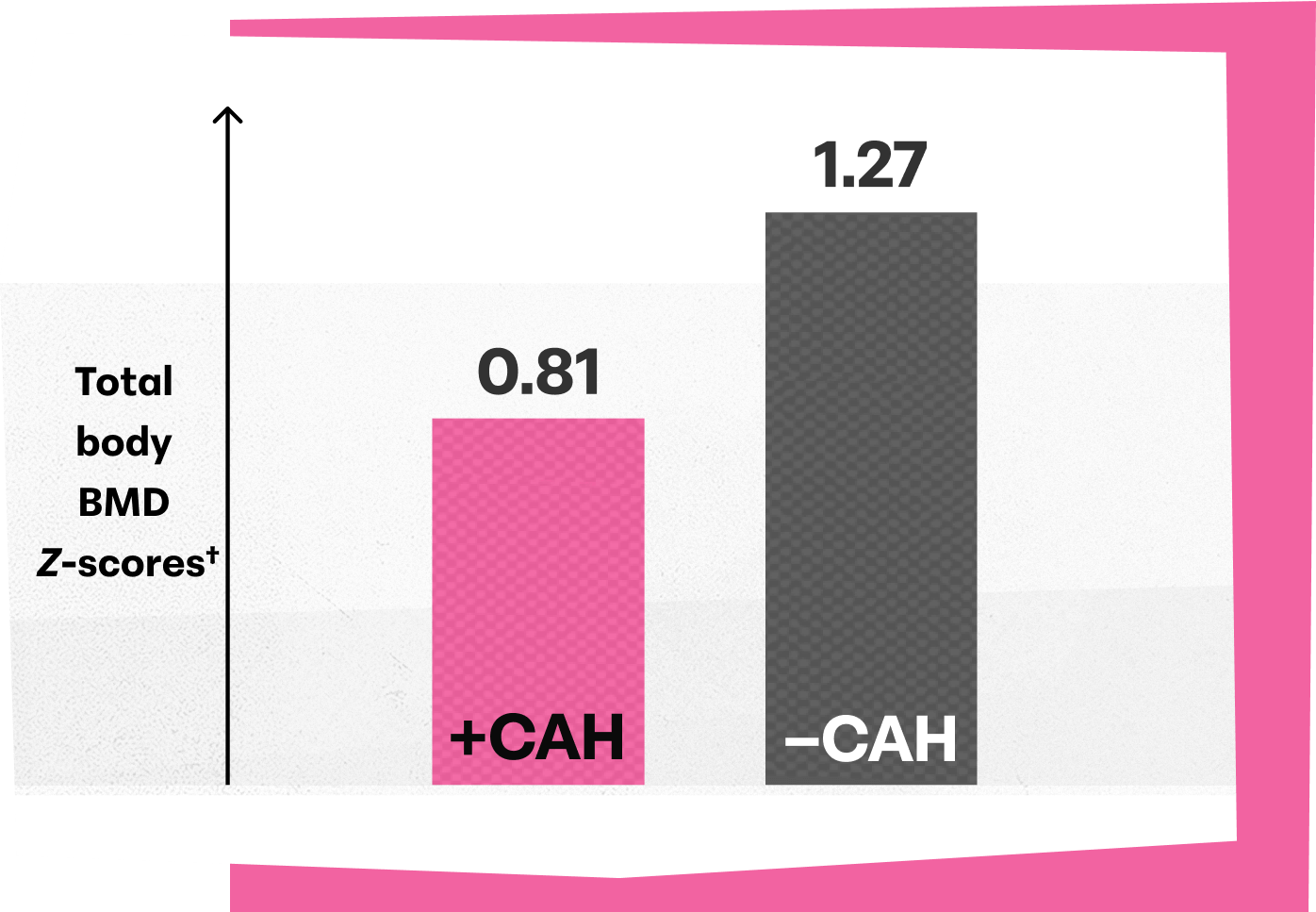
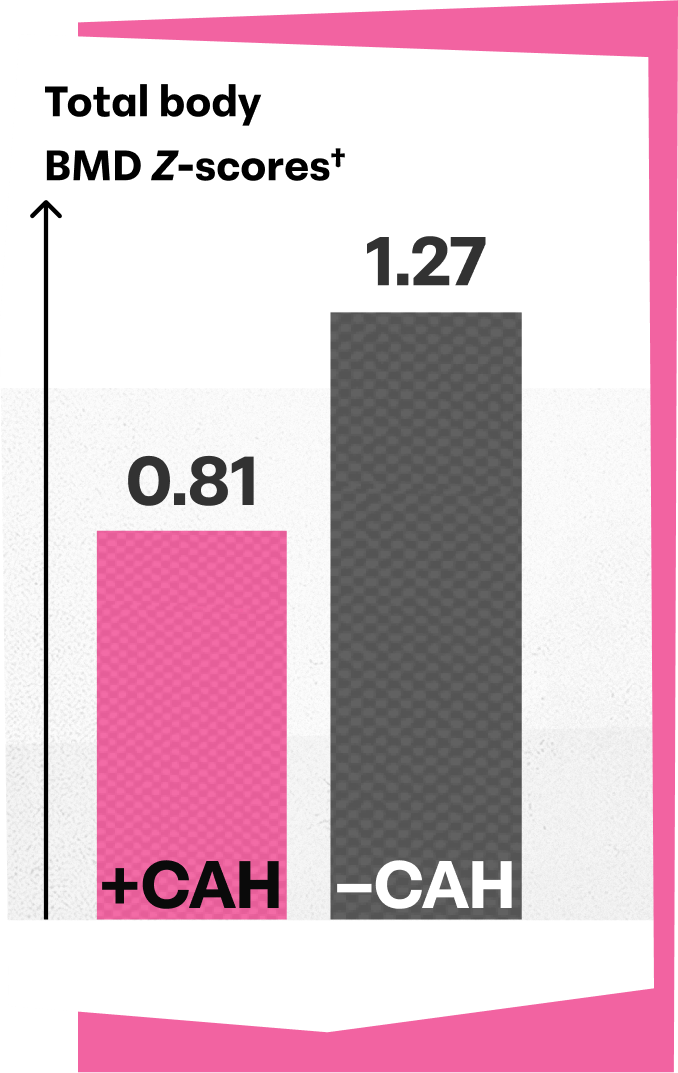
In a study measuring total body BMD in children with CAH (n=254) and without (n=344)1:

Study details1

  • Median age: 12 years
  • Average GC dose: 11.3 ± 2.9
    mg/m2/day‡
  • Controls were age-, sex-, and
    BMI-matched

A decrease in BMD can lead to osteopenia and osteoporosis.2

Lower total body BMD in children with CAH bar graphLower total body BMD in children with CAH bar graph

1.5x higher incidence of fractures in children with CAH vs those without CAH was reported in a separate study3§

*Doses higher than needed to replace missing cortisol.

†+CAH indicates patients with CAH. –CAH indicates patients without CAH.

‡In hydrocortisone equivalents.

§Study included 336 patients with CAH ages 0-19 vs controls from a population registry (n=71,400) who were matched for sex, age, and place of birth.

BMD=bone mineral density; BMI=body mass index; GC=glucocorticoid.3

A meta-analysis of 9 studies saw lower BMD in adults with CAH vs without CAH4

Total body BMD

0.06 g/cm2 lower with CAH (n=197) vs without CAH (n=292); P<0.00001

Lumbar spine BMD

0.05 g/cm2 lower with CAH (n=250) vs without CAH (n=342); P<0.00001‖

Femoral neck BMD

0.07 g/cm2 lower with CAH (n=181) vs without CAH (n=183); P<0.00001

Meta-analysis details4:

  • Median age: 31 years 
  • GC dose: 9.66-22 mg/m2/day 
  • Controls were age- and sex-matched

A decrease in BMD can lead to osteopenia and osteoporosis.2

1.5x higher incidence of fractures in adults with CAH vs those without CAH was reported in a separate study3#

HIGH GC DOSES CAN LEAD TO SHORTER STATURE

Excess adrenal androgens can stimulate rapid initial growth, but result in shorter final adult height due to premature closure of growth plates. High-dose GCs can suppress growth during critical development periods, and similarly result in shorter adult stature.5

Total pubertal growth in children with CAH
vs reference population5†‡

Total pubertal growth in children with CAH bar graph

Hydrocortisone is recommended by the Endocrine Society: Prednisolone is 15x and dexamethasone is 70-80x more suppressive of linear growth than hydrocortisone6,7

†+CAH indicates patients with CAH. –CAH indicates patients without CAH.

‡At the start of puberty, CAH patients were taking either hydrocortisone (mean dose: 16.7 ± 4.1 mg/m2/day) or prednisone (hydrocortisone equivalent mean dose: 21.0 ± 8.1 mg/m2/day). Pubertal growth was defined as growth from onset of puberty (breast Tanner stage 2 or testes volume greater than 3 mL) until 18 years of age. Total pubertal growth was 12.8 ± 7.1 cm in female children with CAH and 17.4 ± 6.9 cm in male children with CAH. In the reference population, mean pubertal growth was 20.3 ± 6.8 cm in female children and 28.2 ± 8.2 cm in male children.5

Higher GC doses are associated with an increased
susceptibility to infection

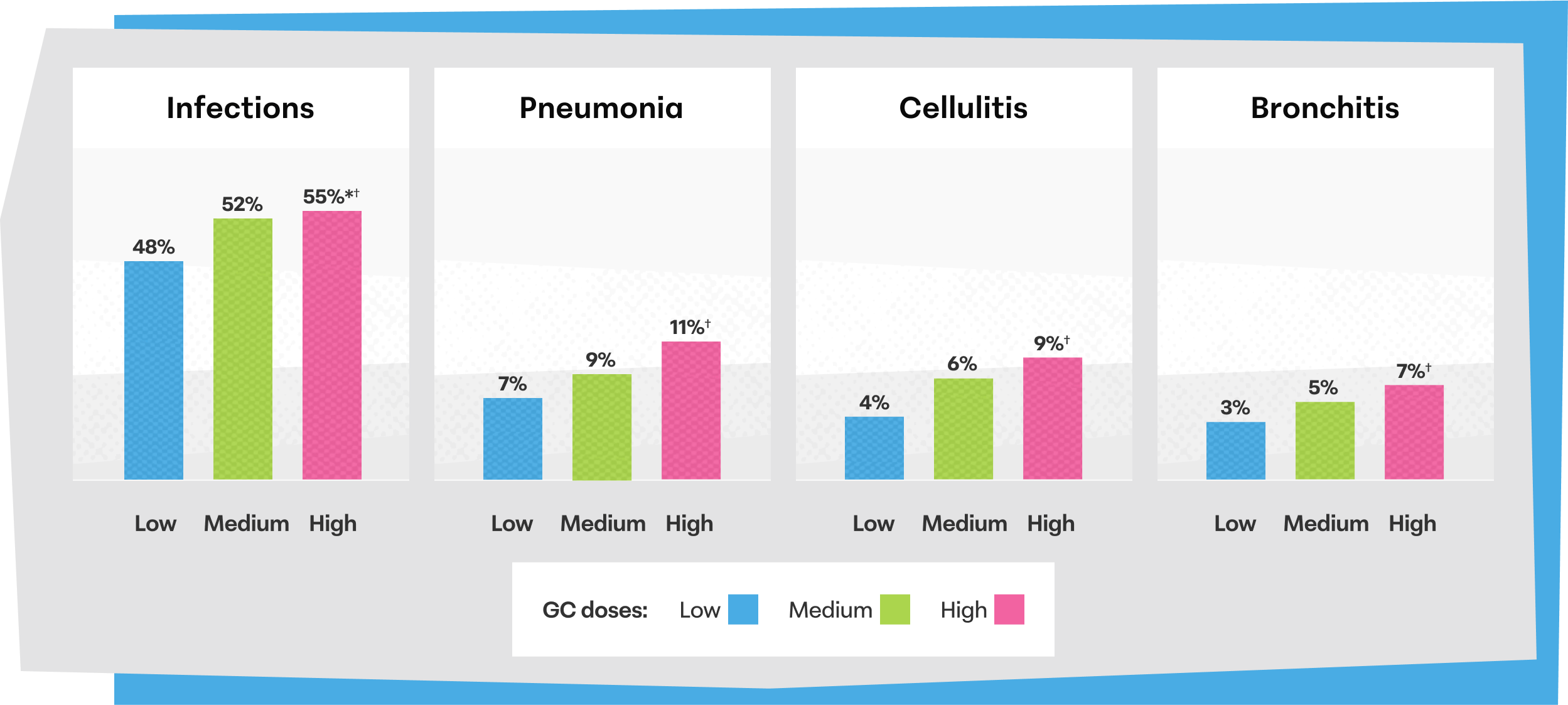
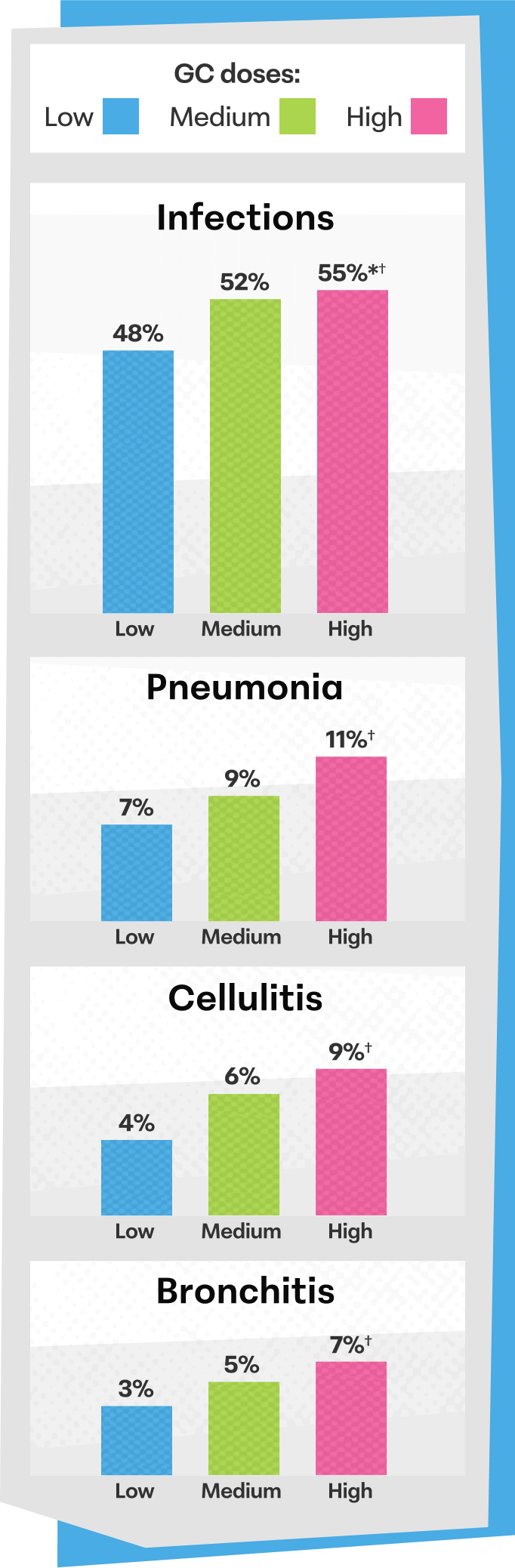
In a study of adults with CAH, the risk of infection increased with higher GC doses8:

Infection susceptibility risk associated with higher GC doses bar graphs Infection susceptibility risk associated with higher GC doses bar graphs

In this study, low GC doses ranged from 10 to <20 mg/day hydrocortisone equivalents (n=480), medium GC doses ranged from 20 to <30 mg/day hydrocortisone equivalents (n=574), and high GC doses were ≥30 mg/day hydrocortisone equivalents (n=965).

*The scale for infections is different than that for pneumonia, cellulitis, and bronchitis charts.

†Significantly greater incidence vs low GC doses.

See what makes treating CAH with GCs alone so complex9

The complications of GC treatment
See how GCs impact the HPA axis9
Review the pathway

REFERENCES

  1. Halper A, Sanchez B, Hodges JS, et al. Bone mineral density and body composition in children with congenital adrenal hyperplasia. Clin Endocrinol (Oxf). 2018;88(6):813-819. doi:10.1111/cen.13580
  2. Hindmarsh PC, Geertsma K. Congenital Adrenal Hyperplasia: A Comprehensive Guide. Elsevier/Academic Press; 2017.
  3. Falhammar H, Frisén L, Hirschberg AL, Nordenskjöld A, Almqvist C, Nordenström A. Increased prevalence of fractures in congenital adrenal hyperplasia: a Swedish population-based national cohort study. J Clin Endocrinol Metab. 2022;107(2):e475-e486. doi:10.1210/clinem/dgab712
  4. Rangaswamaiah S, Gangathimmaiah V, Nordenstrom A, Falhammar H. Bone mineral density in adults with congenital adrenal hyperplasia: a systematic review and meta-analysis. Front Endocrinol. 2020;11:493. doi:10.3389/fendo.2020.00493
  5. Bonfig W, Bechtold S, Schmidt H, Knorr D, Schwarz HP. Reduced final height outcome in congenital adrenal hyperplasia under prednisone treatment: deceleration of growth velocity during puberty. J Clin Endocrinol Metab. 2007;92(5):1635-1639. doi:10.1210/jc.2006-2109
  6. Speiser PW, Arlt W, Auchus RJ, et al. Congenital adrenal hyperplasia due to steroid 21-hydroxylase deficiency: an Endocrine Society clinical practice guideline. J Clin Endocrinol Metab. 2018;103(11):4043-4088. doi:10.1210/jc.2018-01865
  7. Han TS, Stimson RH, Rees DA, et al. Glucocorticoid treatment regimen and health outcomes in adults with congenital adrenal hyperplasia. Clin Endocrinol. 2013;78(2):197-203. doi:10.1111/cen.12045
  8. Sarafoglou K, Casteras A, Charlton RW, Barnes C, Dieyi C, Thornton P. Dose-dependent risks of glucocorticoid treatment in classic congenital adrenal hyperplasia. Poster presented at: European Society for Paediatric Endocrinology; 61st Annual Meeting; September 21-23, 2023; The Hague, Netherlands.
  9. Mallappa A, Merke DP. Management challenges and therapeutic advances in congenital adrenal hyperplasia. Nat Rev Endocrinol. 2022;18(6):337-352. doi:10.1038/s41574-022-00655-w