

Impact of high-dose GCs

GCs ARE NOT IDEAL FOR MANAGING ADRENAL
ANDROGEN EXCESS

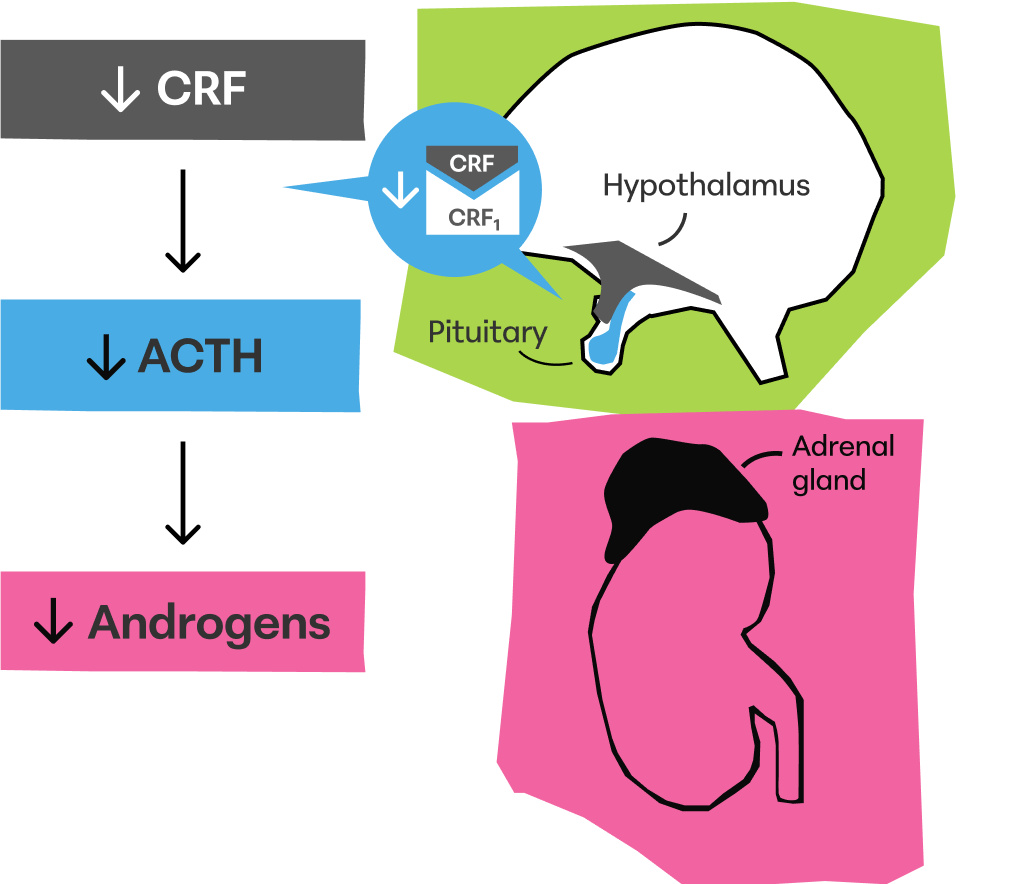
Physiologic GC doses address cortisol deficiency. Higher supraphysiologic doses can be used to regulate adrenal androgen production, but these higher doses come with risks of short- and long-term comorbidities.1-3

When GCs are used alone, it takes supraphysiologic* GC doses to:

  • Lower CRF release
  • Reduce CRF1 receptor
    activation
  • Reduce ACTH release
    from the
    pituitary
  • Lower adrenal
    androgens
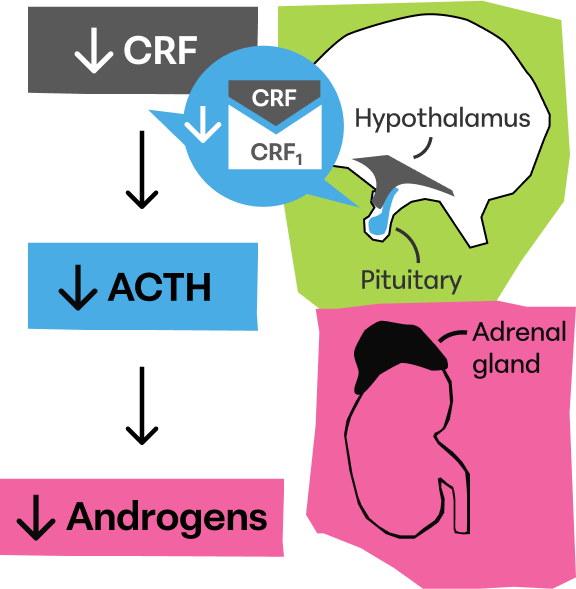
Using supraphysiologic GC doses to regulate androgen production infographicUsing supraphysiologic GC doses to regulate androgen production infographic

*Doses higher than needed to replace missing cortisol.
ACTH=adrenocorticotropic hormone; CRF=corticotropin-releasing factor; CRF1=corticotropin-releasing factor type 1; GC=glucocorticoid.

HIGH-DOSE GCs CARRY MULTIPLE RISKS

Patients with CAH have an increased risk of comorbidities related to high GC doses3-5

Cardiometabolic impact
  • Hypertension
  • Insulin resistance
  • Obesity
Bone health impact and infection risk
  • Osteopenia and osteoporosis
  • Height below genetic potential
  • Infection risk
Neurological health impact
  • Mood disorders
  • Cognitive impairment
  • Sleep disturbances

Which high-dose GC-related symptoms and risks do you see most in your patients with CAH?

View results

See what makes treating CAH with GCs alone so complex6

The complications of GC treatment

REFERENCES

  1. Claahsen-van der Grinten HL, Speiser PW, Ahmed SF, et al. Congenital adrenal hyperplasia—current insights in pathophysiology, diagnostics, and management. Endocr Rev. 2022;43(1):91-159. doi:10.1210/endrev/bnab016
  2. Turcu AF, Auchus RJ. Novel treatment strategies in congenital adrenal hyperplasia. Curr Opin Endocrinol Diabetes Obes. 2016;23(3):225-232. doi:10.1097/MED.0000000000000256
  3. Prete A, Auchus RJ, Ross RJ. Clinical advances in the pharmacotherapy of congenital adrenal hyperplasia. Eur J Endocrinol. 2022;186(1):R1-R14. doi:10.1530/EJE-21-0794
  4. Merke DP, Auchus RJ. Congenital adrenal hyperplasia due to 21-hydroxylase deficiency. N Engl J Med. 2020;383(13):1248-1261. doi:10.1056/NEJMra1909786
  5. Hindmarsh PC, Geertsma K. Congenital Adrenal Hyperplasia: A Comprehensive Guide. Elsevier/Academic Press; 2017.
  6. Mallappa A, Merke DP. Management challenges and therapeutic advances in congenital adrenal hyperplasia. Nat Rev Endocrinol. 2022;18(6):337-352. doi:10.1038/s41574-022-00655-w