
THE COMPLICATIONS OF TREATING CAH WITH GCs ALONE

Treating CAH
with GCs
alone
creates a
tug-of-war
between androgen
levels and GC
comorbidities1

Clinical management aims to balance the hormonal deficiency of cortisol and aldosterone while controlling the overproduction of adrenal androgens.1

fork in road, road sign

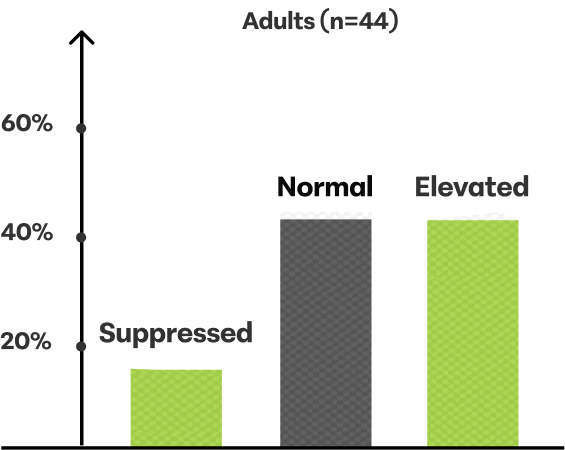
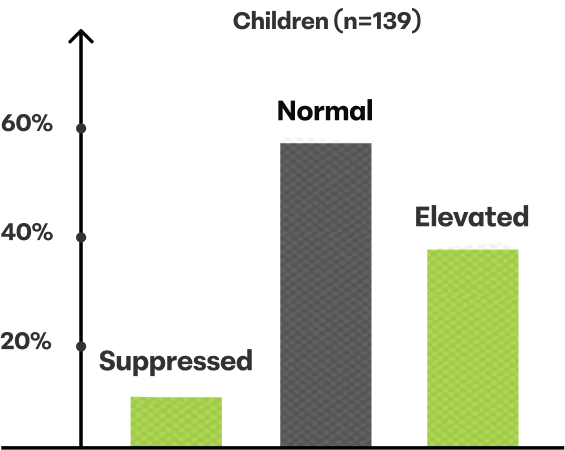
Many pediatric and adult patients with CAH treated with GCs alone have androstenedione levels that are not optimal2

~2/3

of patients with CAH treated solely with GCs have suboptimal androgen levels1-3

Androstenedione
levels2*

Androstenedione levels in adults with CAH bar graph
Androstenedione levels in children with CAH bar graph

Adapted from Finkielstain GP et al. Clinical characteristics of a cohort of 244 patients with congenital adrenal hyperplasia. J Clin Endocrinol Metab. 2012;97(12):4429-4438. doi:10.1210/jc.2012-2102. Reproduced by permission of Oxford University Press on behalf of the Endocrine Society. https://academic.oup.com/jcem/article/97/12/4429/2536442

Median age of patients was 33 years.
GC=glucocorticoid.

This study included patients from all regions of the US2:

  • Majority of children were on hydrocortisone (15.0 ± 5.9 mg/m2/day)
  • Adults were taking either hydrocortisone, prednisone, or dexamethasone (17.9 ± 7.6 mg/m2/day)

*Suppressed, normal, and elevated levels are determined by age- and sex-specific normal ranges.

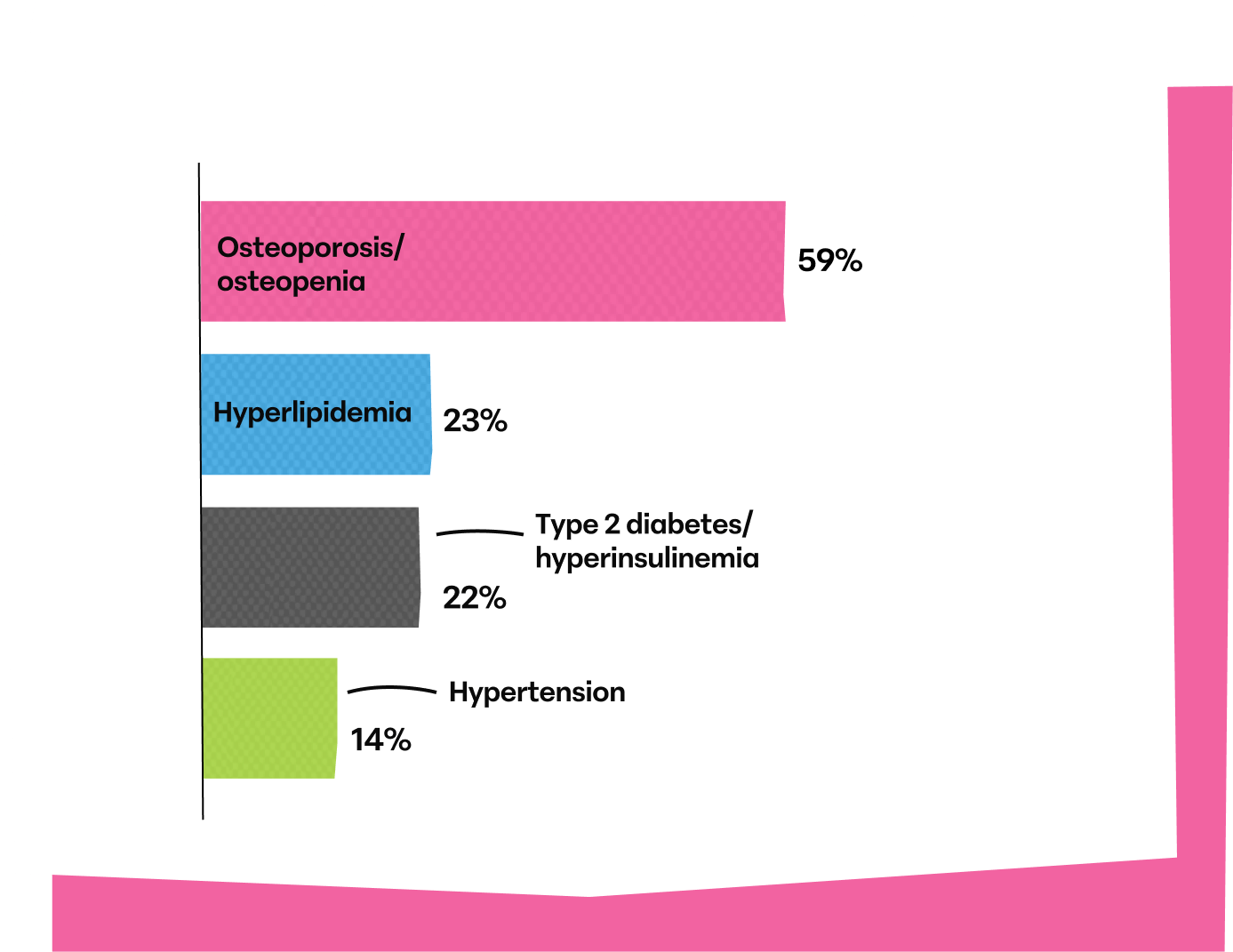
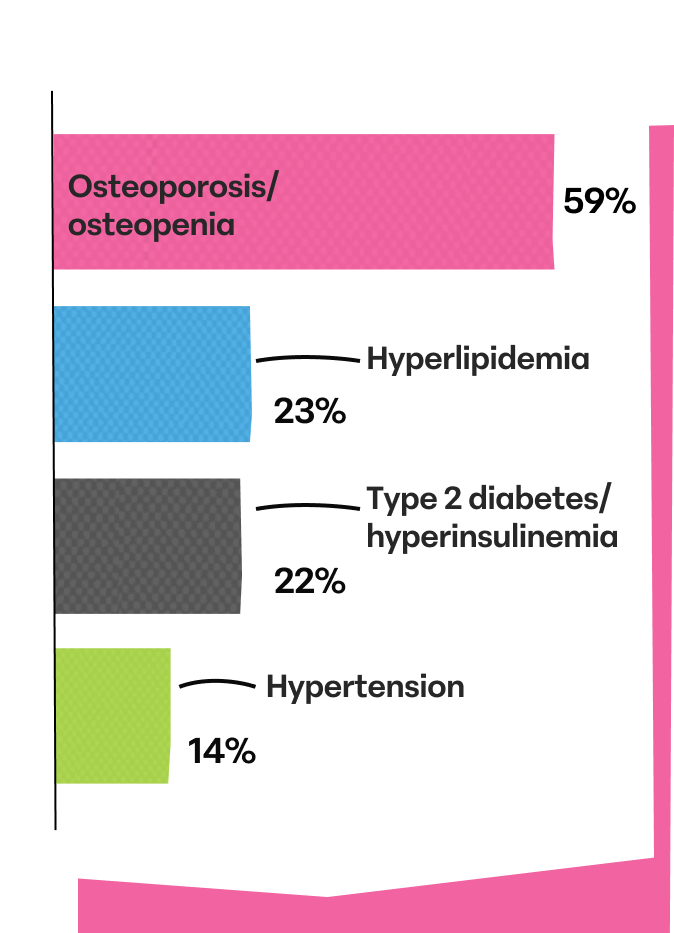
NEARLY 1/3 OF ADULT PATIENTS WITH CAH TAKING GCs ALONE TO MANAGE ANDROGENS are treated for ≥1 comorbidity†

In a multicenter study, 73 of 244 CAH patients taking GCs alone (median age: 33 years) were treated for ≥1 of the assessed cardiometabolic and bone comorbidities.4

~1/3

of adults with CAH taking GCs alone are treated for ≥1 cardiometabolic or bone comorbidity4†

Chart showning comorbidity rates in CAH patients taking GCs: osteoporosis and osteopenia, hyperlipidemia, type 2 diabetes, hypertensionChart showning comorbidity rates in CAH patients taking GCs: osteoporosis and osteopenia, hyperlipidemia, type 2 diabetes, hypertension

†Osteoporosis incidence among young adults (aged 20-44) was estimated at 4.1 per 100,000 person-years in a Mayo Clinic study, and >50% of those cases were induced. The prevalence of dyslipidemia, diabetes, and hypertension among young adults (aged 18-44) is 37%, 4%, and 10% respectively, based on a recent study using National Health and Nutrition Examination Survey (NHANES) data. Neither of these studies reports rates of treatment for these conditions.5,6

Explore the Potential of the CRF Pathway in ACTH and androgen management1

More on the CRF pathway

REFERENCES

  1. Mallappa A, Merke DP. Management challenges and therapeutic advances in congenital adrenal hyperplasia. Nat Rev Endocrinol. 2022;18(6):337-352. doi:10.1038/s41574-022-00655-w
  2. Finkielstain GP, Kim MS, Sinaii N, et al. Clinical characteristics of a cohort of 244 patients with congenital adrenal hyperplasia. J Clin Endocrinol Metab. 2012;97(12):4429-4438.
    doi:10.1210/jc.2012-2102
  3. Arlt W, Willis DS, Wild SH, et al. Health status of adults with congenital adrenal hyperplasia: a cohort study of 203 patients. J Clin Endocrinol Metab. 2010;95(11):5110-5121. doi:10.1210/jc.2010-0917
  4. Righi B, Ali SR, Bryce J, et al. Long-term cardiometabolic morbidity in young adults with classic 21-hydroxylase deficiency congenital adrenal hyperplasia. Endocrine. 2023;80(3):630-638.
    doi:10.1007/s12020-023-03330-w
  5. Khosla S, Lufkin EG, Hodgson SF, Fitzpatrick LA, Melton LJ III. Epidemiology and clinical features of osteoporosis in young individuals. Bone. 1994;15(5):551-555. doi:10.1016/8756-3282(94)90280-1
  6. Shi S, Huang H, Huang Y, Zhong VW, Feng N. Lifestyle behaviors and cardiometabolic diseases by race and ethnicity and social risk factors among US young adults, 2011 to 2018. J Am Heart Assoc. 2023;12(17):e028926. doi:10.1161/JAHA.122.028926