
NEURO-
LOGICAL
HEALTH

increased risk of mood disorders

Prolonged use and elevated levels of GCs may have a psychological impact on CAH patients, including anxiety and mood disorders.1

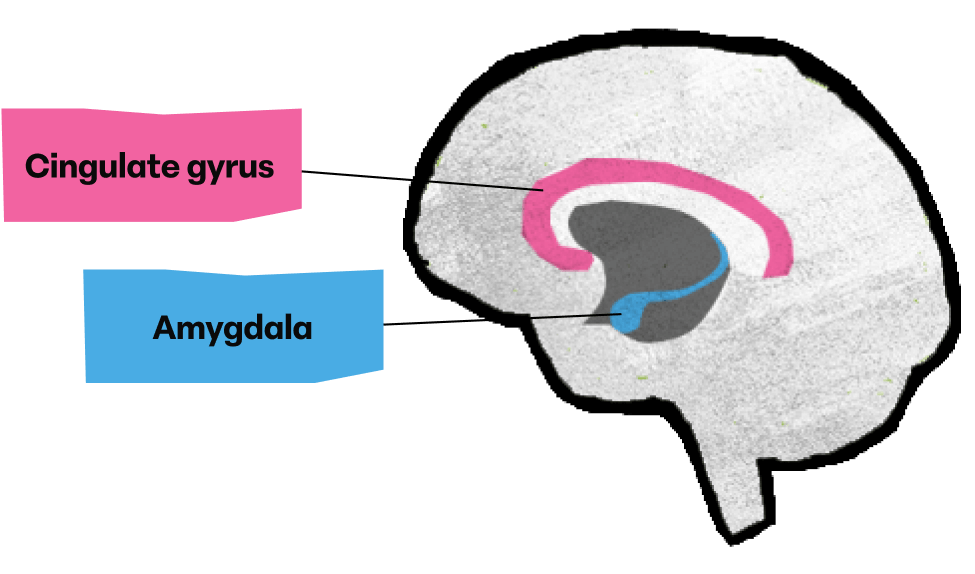
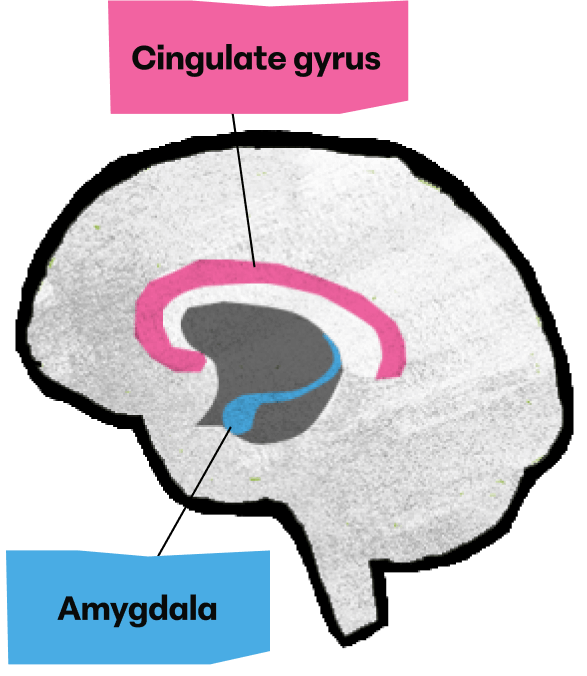
GC receptors in the brain locationsGC receptors in the brain locations

GC receptors are located in
parts of the
brain linked to
emotions and behavior.2

~2×

more likely to have a mood disorder when taking GCs vs patients not taking GCs in a recent study3*

31%

of adults with CAH treated with high GC doses experienced anxiety, a rate that was significantly greater than with low GC doses4†

Children may benefit from mental health screening because, when left untreated, depression and anxiety may recur later in life5

*Population study of 393 patients using GCs systematically vs 74,591 non-GC users. The study population was not specific to CAH patients.3

†Based on an analysis of medical and pharmacy claims for adults with CAH treated with low, medium, or high GC doses. Low GC doses ranged from 10 to
<20 mg/day hydrocortisone equivalents (n=480), medium GC doses ranged from 20 to <30 mg/day hydrocortisone equivalents (n=574), and high GC doses were ≥30 mg/day hydrocortisone equivalents (n=965). A total of 25% and 27% of patients treated with low and medium GC doses, respectively, experienced anxiety.4

GC=glucocorticoid.

The risksThe risks of HIGH-DOSE GCs on the brain

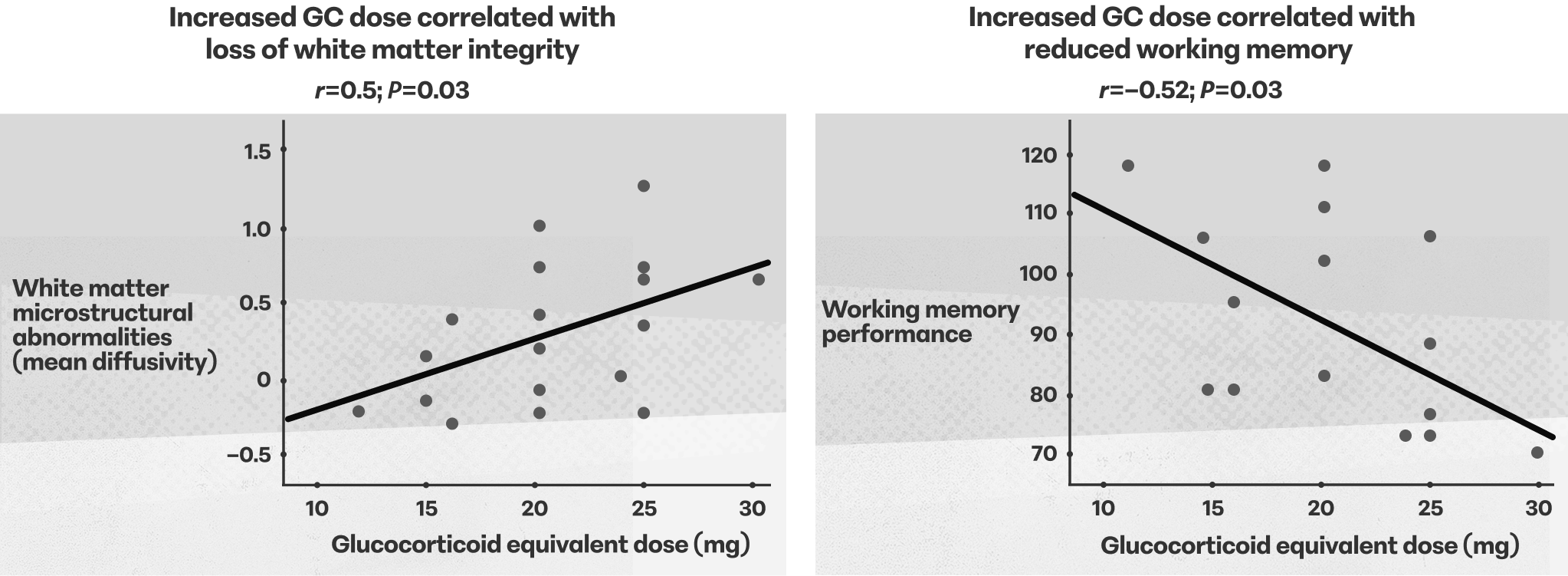
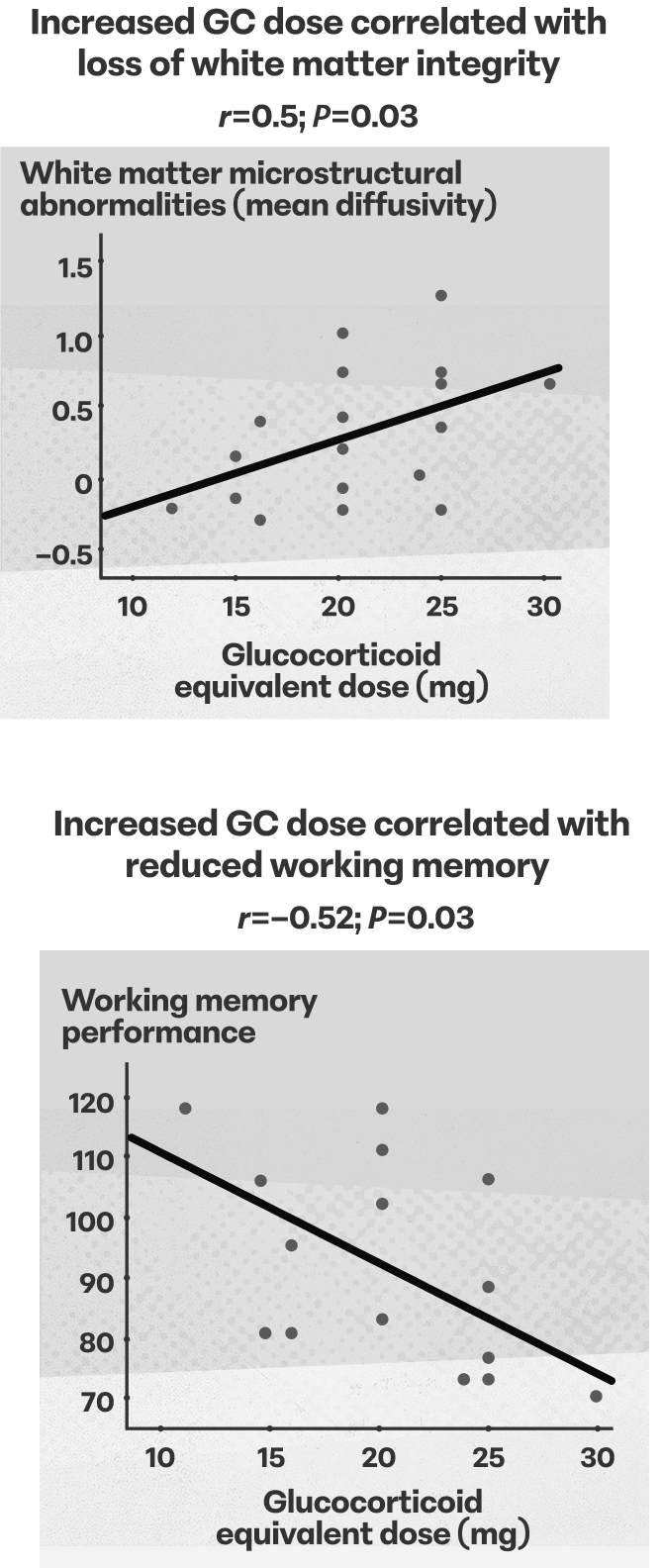
High GC dosing can be a risk factor for cognitive impairment in patients with CAH. It has also been linked to structural impairment and cognitive abnormalities.6

possible Structural changes in CAH6

  • Overall smaller brain volumes
  • Regional differences in
    gray or white matter

possible Functional impairment in CAH6

  • Altered activation patterns in regions
    related to cognitive processing
  • Reduced working memory capacity

In a study of adult women with CAH treated with GCs6:

Increased GC doses association with neurological structural and functional changes in adult women graphsIncreased GC doses association with neurological structural and functional changes in adult women graphs

Adapted via design and copy changes from Webb EA et al. Quantitative brain MRI in congenital adrenal hyperplasia: in vivo assessment of the cognitive and structural impact of steroid hormones. J Clin Endocrinol Metab. 2018;103(4):1330-1341. This work is licensed under the Creative Commons Attribution 4.0 International License

GCs CAN AFFECT SLEEP HEALTH

In a study of children with CAH (n=44) vs published healthy controls, those with CAH had7:

41%

more wake timeafter sleep onset

39%

lower sleep efficiency

In a cross-sectional survey that included
364 adults taking GCs long-term8*:

57%

experienced insomnia†

In a study of adults with CAH, higher rates of energy/sleep disorders with high GC doses (n=965) vs low GC doses (n=480)4‡:

45%

energy/sleep disorders withhigh doses

36%

energy/sleep disorders withlow doses

Persistent sleep disturbances can increase the risk of other health consequences, including metabolic disorders and depression9

*Study population included general GC users and was not specific to patients with CAH. Patients were taking GCs for at least 6 months.8

†For reference, 14.5% of adults have trouble falling asleep and 17.8% of adults have trouble staying asleep according to the Centers for Disease Control and Prevention.10

‡Low GC doses ranged from 10 to <20 mg/day hydrocortisone equivalents (n=480), medium GC doses ranged from 20 to <30 mg/day hydrocortisone equivalents (n=574), and high GC doses were ≥30 mg/day hydrocortisone equivalents (n=965). A total of 40% of patients treated with medium GC doses experienced energy/sleep disorders.4

See what makes treating CAH with GCs alone so complex11
The complications of GC treatment

REFERENCES

  1. Falhammar H, Butwicka A, Landén M, et al. Increased psychiatric morbidity in men with congenital adrenal hyperplasia due to 21-hydroxylase deficiency. J Clin Endocrinol Metab. 2014;99(3)E554-E560. doi:10.1210/jc.2013-3707
  2. De Alcubierre D, Ferrari D, Mauro G, lsidori AM, Tomlinson JW, Pofi R. Glucocorticoids and cognitive function: a walkthrough in endogenous and exogenous alterations. J Endocrinol Invest. 2023;46(10):1961-1982. doi:10.1007/s40618-023-02091-7
  3. Savas M, Vinkers CH, Rosmalen JGM, et al. Systemic and local corticosteroid use is associated with reduced executive cognition, and mood and anxiety disorders. Neuroendocrinology. 2020;110(3-4):282-291. doi:10.1159/000501617
  4. Sarafoglou K, Casteras A, Charlton RW, Barnes C, Dieyi C, Thornton P. Dose-dependent risks of glucocorticoid treatment in classic congenital adrenal hyperplasia. Poster presented at: European Society for Paediatric Endocrinology; 61st Annual Meeting; September 21-23, 2023; The Hague, Netherlands.
  5. Harasymiw LA, Grosse SD, Cullen KR, Bitsko RH, Perou R, Sarafoglou K. Depressive and anxiety disorders and antidepressant prescriptions among insured children and young adults with congenital adrenal hyperplasia in the United States. Front Endocrinol (Lausanne). 2023;14:1129584. doi:10.3389/fendo.2023.1129584
  6. Webb EA, Elliott L, Carlin D, et al. Quantitative brain MRI in congenital adrenal hyperplasia: in vivo assessment of the cognitive and structural impact of steroid hormones. J Clin Endocrinol Metab. 2018;103(4):1330-1341. doi:10.1210/jc.2017-01481
  7. Golob L, Liu W, Mercado-Munoz Y, et al. Sleep health characteristics in children with congenital adrenal hyperplasia. Abstract presented at: European Society for Paediatric Endocrinology; 61st Annual Meeting; September 21-23, 2023; The Hague, Netherlands.
  8. Morin C, Fardet L. Systemic glucocorticoid therapy: risk factors for reported adverse events and beliefs about the drug. A cross-sectional online survey of 820 patients. Clin Rheumatol. 2015;34(12):2119-2126. doi:10.1007/s10067-015-2953-7
  9. Depner CM, Stothard ER, Wright KP Jr. Metabolic consequences of sleep and circadian disorders. Curr Diab Rep. 2014;14(7):507. doi:10.1007/s11892-014-0507-z
  10. Adjaye-Gbewonyo D, Ng AE, Black LI. Sleep difficulties in adults: United States, 2020. NCHS Data Brief. 2022;(436):1-8. doi:10.15620/cdc:117490
  11. Mallappa A, Merke DP. Management challenges and therapeutic advances in congenital adrenal hyperplasia. Nat Rev Endocrinol. 2022;18(6):337-352. doi:10.1038/s41574-022-00655-w